One Room Always Cold? Check the Return Air Before the Thermostat
Every heating season produces the same complaint: the house is comfortable, but one room never gets there. The usual response is to turn the thermostat up, close the vents in rooms nobody uses to "push more air" to the cold one, and eventually put a space heater in the corner and give up.
All three of those make the problem worse. The reason is a principle that gets skipped in almost every conversation about airflow: air can only enter a room as fast as it can leave it.
Supply Is Only Half the System
A forced-air system is a loop. The blower pushes conditioned air out through the supply ducts and pulls an equal volume back through the returns. Those two halves have to balance, because air is not compressible at the pressures involved — whatever goes in has to come out.
When a room has a supply register but no adequate return path, closing its door turns it into a sealed box. The supply register tries to push air in, the room pressurizes slightly, and that back-pressure chokes the airflow coming out of the register. The register is working. The air simply has nowhere to go.
This is why the symptom so often tracks with the door. A bedroom that heats fine with the door open and stays cold overnight with it closed is not a capacity problem — it is a pressure problem, and no amount of thermostat adjustment will fix it.
The Door Test
Hold a tissue or your hand at the supply register with the room door wide open, then close the door and check again. A noticeable drop in airflow confirms the room has no return path, and points directly at the fix.
Why Closing Other Vents Backfires
This is the most persistent myth in residential HVAC, and it is worth being blunt about because it causes real equipment damage.
Closing supply registers does not redirect air — it raises static pressure in the duct system. The blower was selected to move a certain volume of air against a certain resistance, and adding resistance does not make it push harder. It makes it move less air overall. What follows:
- Total system airflow drops, so every room gets less, including the cold one
- Duct leakage increases, because higher pressure forces more air out of every seam and joint — often into an attic or crawlspace
- In heating, the furnace can trip its high limit and begin short cycling, since there is not enough airflow to carry heat away from the heat exchanger
- In cooling, the evaporator coil can freeze for the same reason in reverse — insufficient airflow across the coil
- Blower strain. A standard PSC blower simply moves less air; a variable-speed ECM blower ramps up to compensate and consumes more electricity doing it, which undercuts the energy savings the whole exercise was meant to achieve
Closing a register in an unused room is a reasonable thing to do with one or two registers in a well-designed system. Closing several as a strategy to force air elsewhere works against the equipment.
What's Actually Causing It
Working roughly from most to least common:
- No return path from the room. No return grille, no door undercut, and a door that gets closed. The most frequent cause in bedrooms.
- A restricted filter. Reduces airflow system-wide, and the room at the end of the longest duct run feels it first.
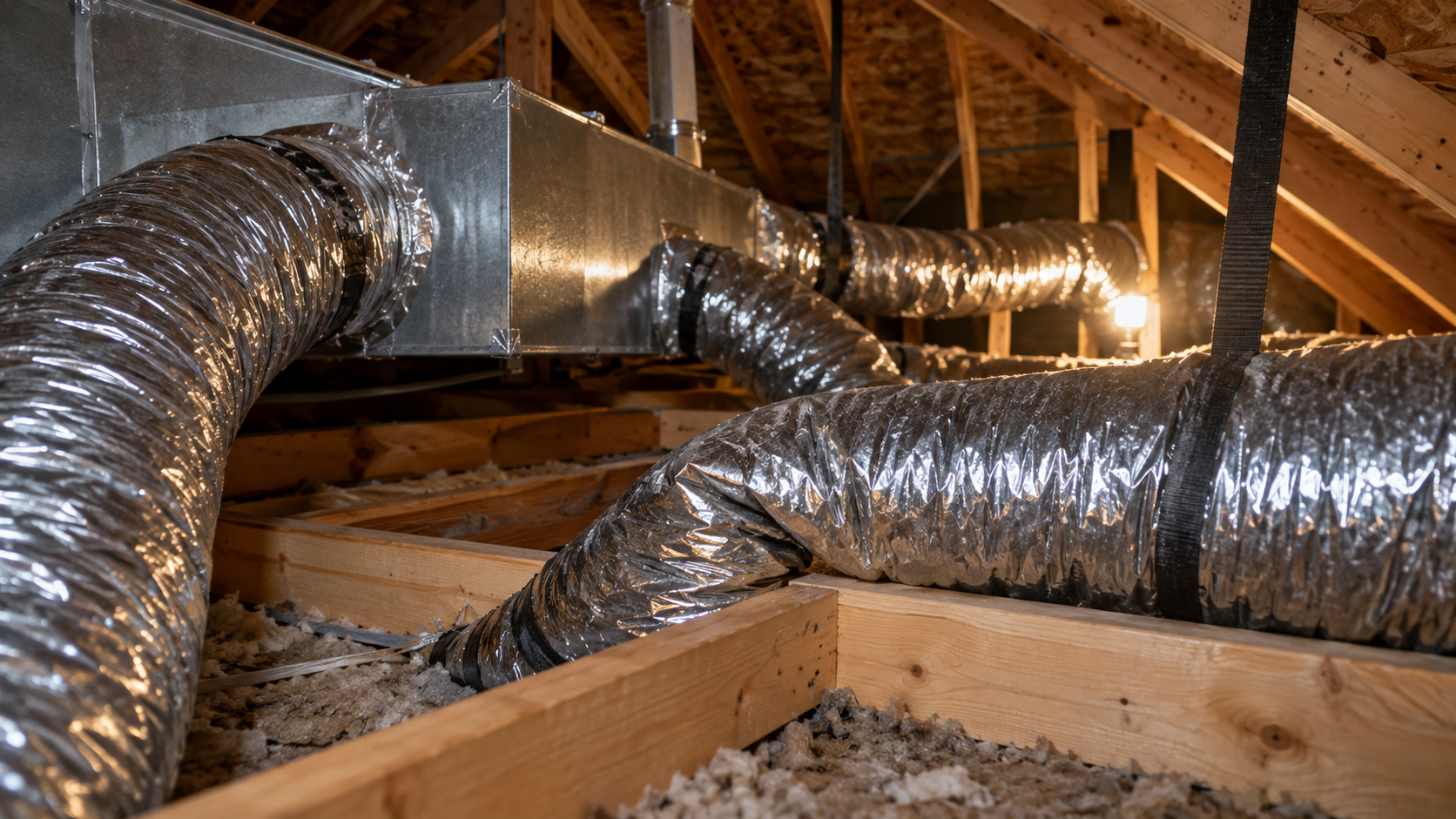
- Crushed, kinked, or disconnected flex duct. Extremely common in attics and crawlspaces, where a run compressed over a joist or pinched behind a truss can lose most of its capacity. A disconnected run delivers the heat into the attic instead.
- A balancing damper left in the wrong position. Branch dampers get set during commissioning and then forgotten, or get moved during unrelated work.
- The last room on the trunk. Static pressure drops along the run, so the furthest room gets the least air unless the duct was sized to compensate.
- Blocked registers. Furniture, rugs, and curtains over a supply or return. Simple, and worth ruling out before anything else.
- Blower speed set too low for the system's actual static pressure.
- Undersized return grille. A return that is too small for the system's airflow restricts the whole loop, not just one room.
Matching Symptom to Cause
| What You Observe | Likely Cause |
|---|---|
| Fine with the door open, cold with it closed | No return path from the room |
| One room weak, everything else normal | Damper position, crushed duct, or a disconnected run |
| Every room weak | Filter, undersized return, or blower speed |
| Rooms furthest from the furnace are worst | Duct sizing or system static pressure |
| Got worse after closing vents elsewhere | Raised static pressure reducing total airflow |
| Furnace short cycles and rooms are cold | Airflow restriction tripping the high limit |
The Fixes That Work
For a return air problem, there are four standard solutions in rough order of invasiveness:
- Door undercut. Cheapest option — trimming the door bottom to leave a gap gives air a path out. Effective for small rooms, limited by how much gap is acceptable before it becomes a privacy or sound issue.
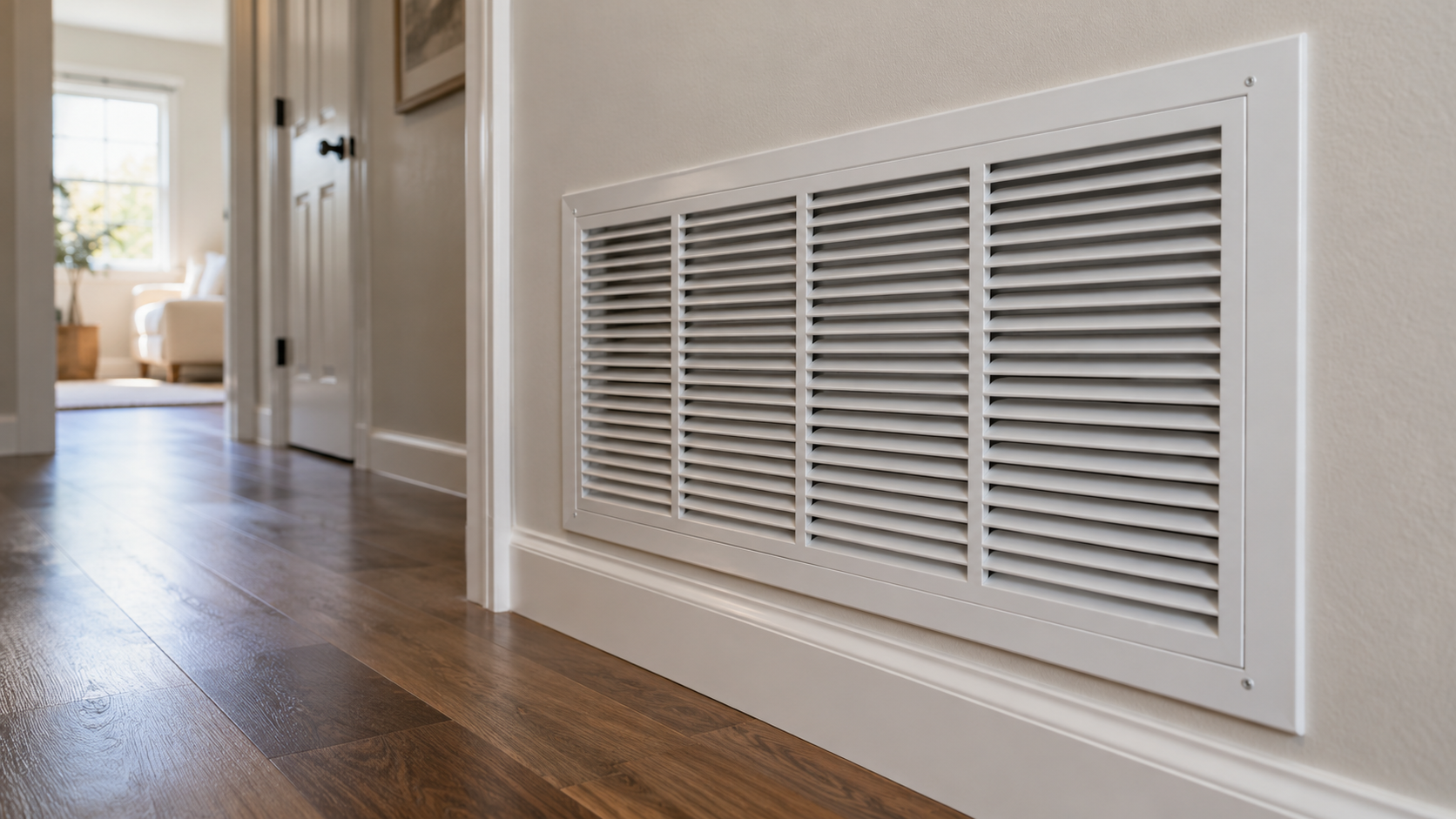
- Transfer grille. A pair of grilles installed through the wall between the room and an adjacent space. Handles more airflow than an undercut without running any duct.
- Jumper duct. A short duct looping from a ceiling grille in the room to a ceiling grille in the hallway. Costs more than a transfer grille but preserves sound separation, which matters for bedrooms.
- A dedicated return. Ducting the room back to the return trunk. The best result and the most work.
For a supply-side problem, the fixes are more direct: replace crushed or kinked duct, reconnect what has come loose, reset the balancing dampers across all branches rather than only the problem one, and verify the filter is not the limiting factor before anything else.
Pro Tip for Contractors: Measure total external static pressure across the air handler before quoting duct modifications. A system already at or above its nameplate maximum has an airflow problem that no amount of register adjustment or damper balancing will solve — and balancing a starved system just moves the complaint from one room to another.
A Note on Zoned Systems
On a zoned system the dampers are motorized and controlled by a panel, which changes the diagnosis. A single cold zone usually points at a damper motor that is not opening, a zone thermostat not communicating with the panel, or a bypass damper misadjusted to the point that it is dumping air back into the return instead of delivering it.
The underlying principle still holds, though — a zone with insufficient return capacity will underperform no matter how correctly its supply damper operates.
Frequently Asked Questions
Should I close vents in rooms I don't use?
One or two registers in a well-designed system is generally fine. Closing several as a strategy to force air to another room raises static pressure, reduces total airflow, and in heating can trip the furnace high limit. It usually makes the cold room colder, not warmer.
How big should a return air grille be?
It depends on the system's airflow and the face velocity the grille is rated for, so there is no single answer. The practical signal is noise: a return that whistles or roars is undersized for the air it is being asked to move. Sizing it properly requires knowing the system's actual CFM.
Does every room need its own return?
No. A central return in a hallway works well provided air can get from each room to that hallway — which is exactly what an undercut, transfer grille, or jumper duct provides. The requirement is a path, not a dedicated duct.
Why is the room above the garage always the worst?
Those rooms typically have more exterior surface area than others, floors over unconditioned space, and often sit at the end of the longest duct run. The airflow fix still applies, but insulation and the duct run length usually both need attention.
Can I fix this myself?
Clearing blocked registers, replacing the filter, and checking whether a door undercut helps are all reasonable homeowner steps. Measuring static pressure, resizing returns, or rebalancing dampers across the system is work for a technician with a manometer — guessing at damper positions tends to relocate the problem rather than solve it.
Final Thoughts
Start with the door test. If airflow drops when the door closes, the room needs a return path and no other fix will hold. If airflow is weak regardless of the door, look at the filter, then the duct run itself, then the dampers — and resist the temptation to close registers elsewhere, which raises static pressure and reduces the airflow you are trying to increase.
Browse return air grilles, supply registers and grilles, dampers, and flexible duct, or request a wholesale quote for volume orders.