Furnace Pressure Switch Not Closing? Start With the Drain, Not the Switch
A furnace that gets partway through its startup sequence and then quietly gives up is one of the more misread calls in the trade. The thermostat calls for heat, the draft inducer spins up, and then nothing — no ignitor glow, no gas, no flame. After a minute or two the inducer winds down, and the board flashes a pressure switch fault.
The part named in the error code is usually not the part that failed. In most of these calls the pressure switch is working exactly as designed, refusing to close because something upstream of it is genuinely wrong. Replacing the switch without finding that cause either does nothing or, worse, defeats a safety device.
What the Pressure Switch Actually Proves
The pressure switch is a safety interlock. Its job is to prove that the draft inducer is actually moving combustion gases before the board is allowed to light any gas at all.
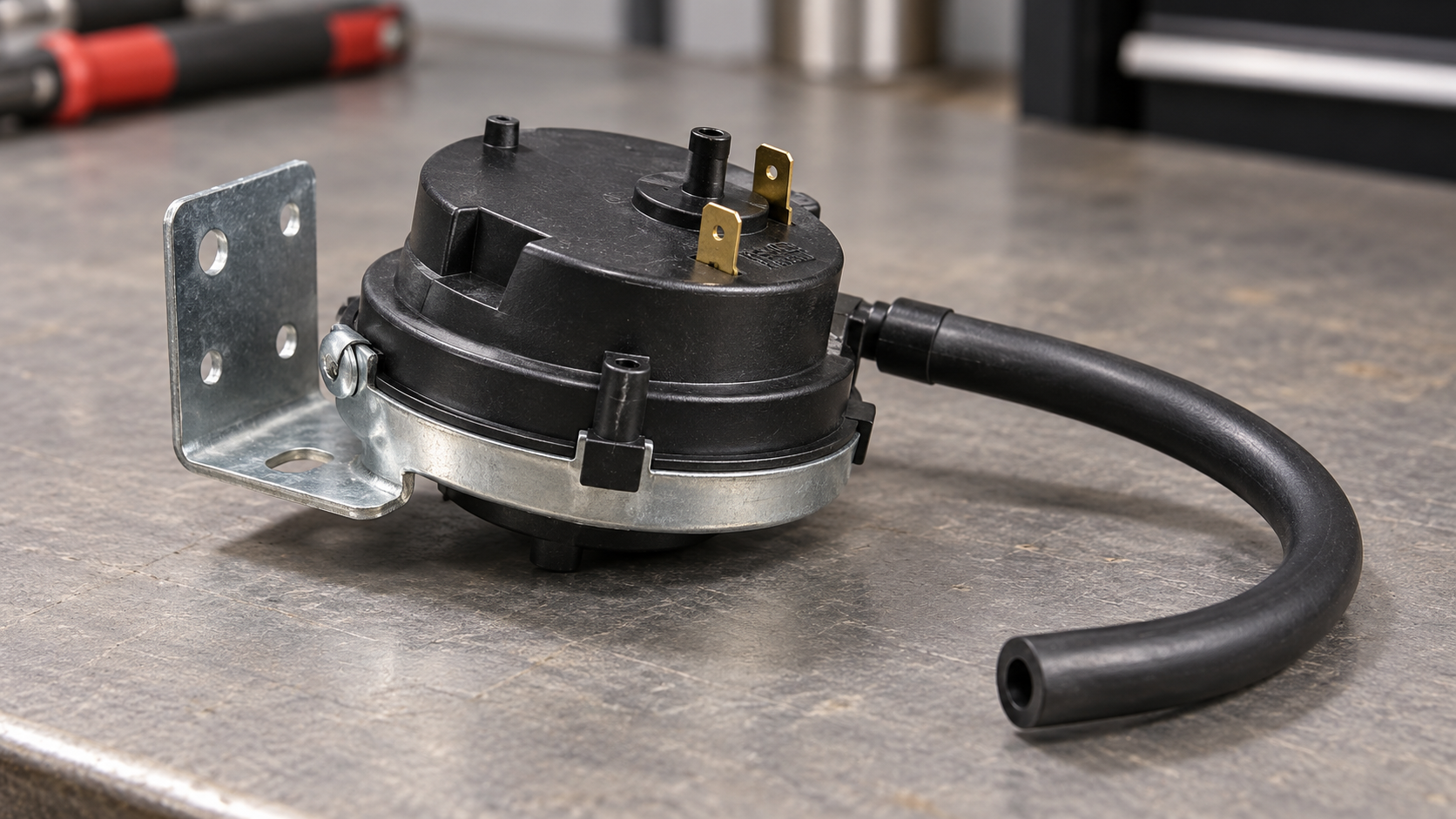
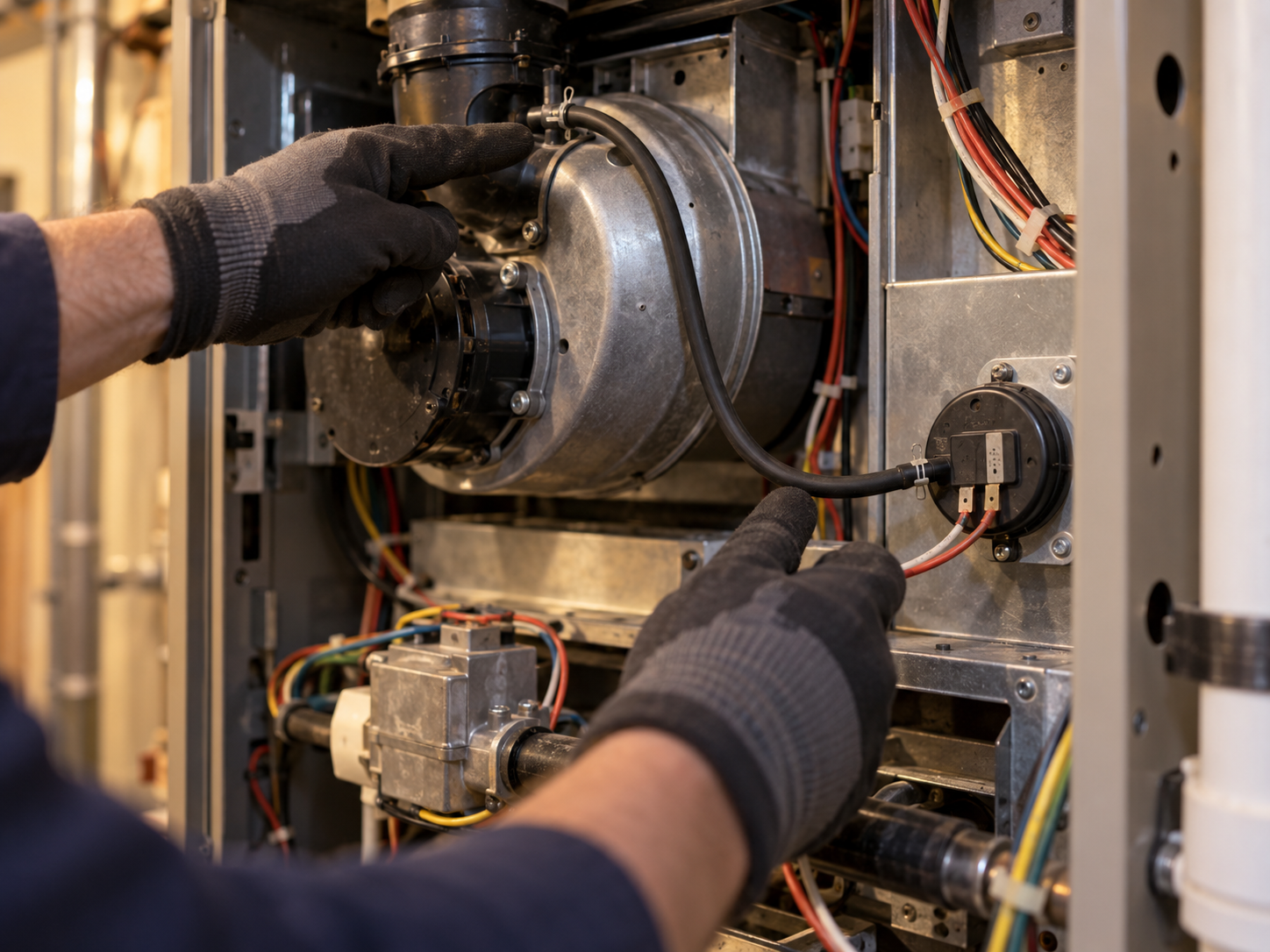
It works on negative pressure. A thin rubber hose runs from the switch to a port on the inducer housing. When the inducer spins up, it creates a vacuum in that housing. The switch is normally open at rest; once the vacuum reaches the switch's rated setpoint, the contacts close and the board gets permission to continue to ignition.
That setpoint is printed directly on the switch body, expressed in inches of water column — something like -0.60" WC. It is a precise value, and it is the reason switches are not interchangeable between models even when they look identical.
The ignition sequence runs in this order, and it will not skip a step:
- Thermostat calls for heat
- Draft inducer starts
- Pressure switch closes, proving draft
- Ignitor energizes
- Gas valve opens and burners light
- Flame sensor confirms flame
If the switch never closes, the board never reaches step four. That is why there is no ignitor glow at all — not because the ignitor failed, but because the furnace never asked it to do anything.
Why It Fails to Close
Working roughly from most to least common:
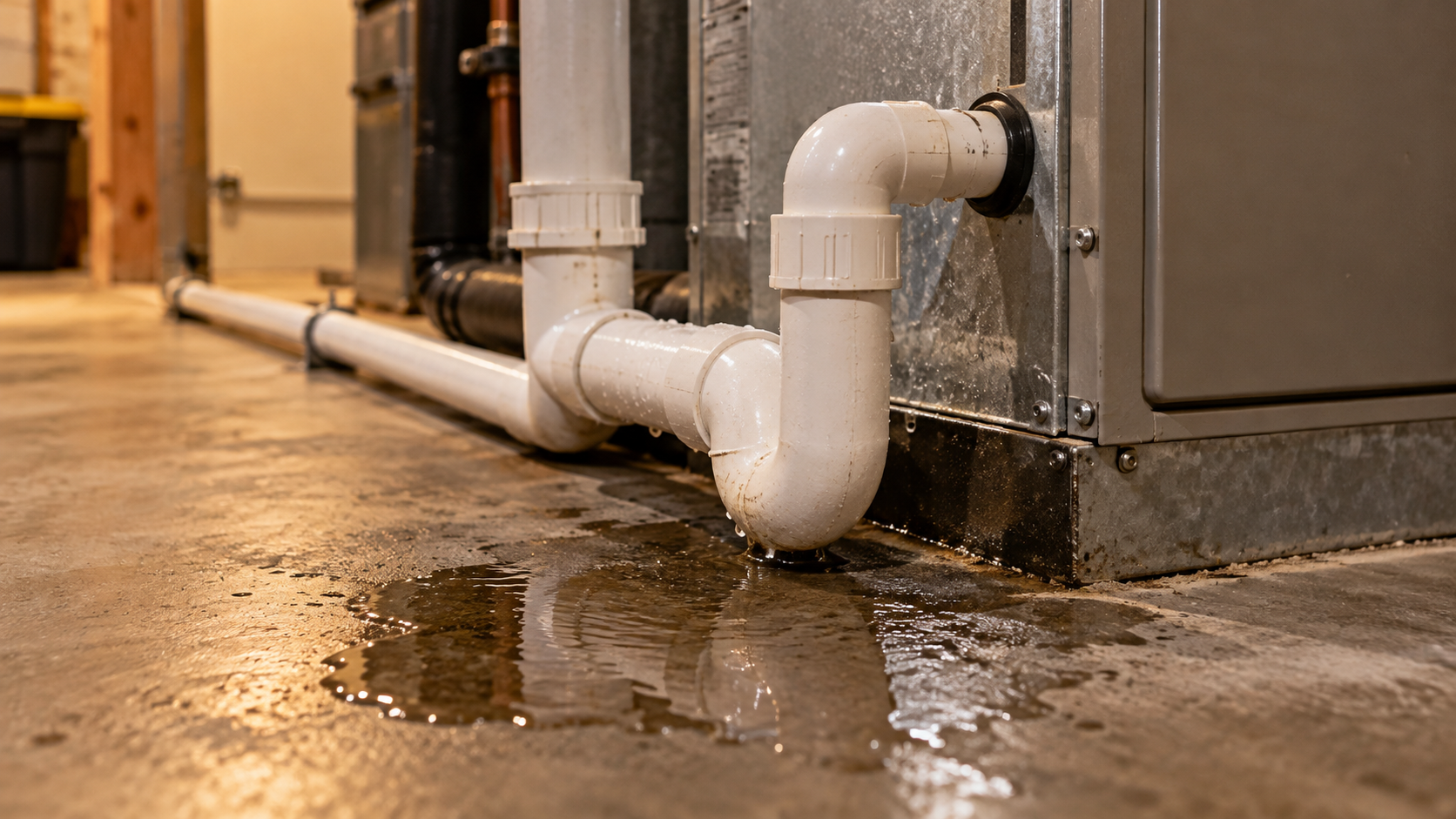
- A blocked condensate drain. On high-efficiency condensing furnaces this is the single most frequent cause. The inducer housing drains condensate, and when that line clogs with sludge or freezes, water backs up into the housing and kills the vacuum. The first hard freeze of the season produces a wave of these calls.
- A blocked flue or intake pipe. Bird nests, insect nests, leaves, snow drifted over a sidewall termination, or a collapsed section of PVC all restrict airflow enough that the inducer cannot generate its rated vacuum.
- A cracked, kinked, or disconnected sensing hose. The hose hardens and splits with age. A hose that has slipped off its port leaks the vacuum it is supposed to be measuring.
- Water in the sensing hose. Condensate pooling in a sagging hose run blocks the pressure signal even when everything else is clear.
- A degraded draft inducer. A motor that spins and sounds normal can still be moving far less air than it should if the wheel is dirty, corroded, or loose on the shaft.
- A plugged port on the inducer housing. The small nipple the hose attaches to can scale over with combustion residue.
- The switch itself. Genuinely possible — diaphragms fatigue and contacts fail — but it belongs at the bottom of this list, not the top.
Where This Fault Sits Among the Others
The value of this symptom is how cleanly it separates from the rest of the no-heat family:
| What You Observe | Likely Cause |
|---|---|
| Inducer runs, no ignitor glow, no gas, pressure switch code | Pressure switch not closing — drain, flue, hose, or inducer |
| Inducer runs, ignitor never glows, no pressure switch code | Failed hot surface ignitor or its circuit |
| Ignitor glows, but burners never light | Gas valve or gas supply issue |
| Burners light, then shut off after a few seconds | Flame sensor — dirty, cracked, or poorly grounded |
| Inducer never starts at all | Inducer motor, control board, or 24V control circuit |
Testing It Properly
Two measurements separate a bad switch from a switch reporting a real problem:
- Continuity across the switch terminals while the inducer runs. No continuity means the switch is not closing. That alone does not tell you whether the switch or the draft is at fault.
- Actual vacuum at the hose, measured with a manometer. This is the step that settles it. If the inducer is pulling at or beyond the switch's printed rating and the switch still will not close, the switch has failed. If the vacuum falls short of that rating, the switch is correct to stay open and the fault is in the drain, flue, hose, or inducer.
Skipping the manometer reading is how a good switch gets replaced with a new one that behaves exactly the same way.
Pro Tip for Contractors: Never jumper a pressure switch to get a system running, even temporarily for diagnosis. The switch is the only thing proving combustion gases are leaving the building — bypassing it on a furnace with a genuinely blocked flue allows the burners to fire into a space with no draft. Diagnose with a manometer instead.
A Switch Stuck Closed Is the Serious One
Most attention goes to switches that will not close, but a switch stuck closed is the more dangerous failure. If the contacts are closed with the inducer off, the board has no way to verify draft at all — it will proceed to ignition whether or not combustion gases are actually venting.
Checking for continuity with the furnace idle takes a few seconds and should be part of any pressure switch diagnosis. A switch showing continuity at rest needs replacing regardless of whether the furnace is currently running fine.
Choosing the Right Replacement
Pressure switches are model-specific. Match:
- Setpoint rating in inches of water column — printed on the original switch body. This is the critical spec; a switch with the wrong setpoint either nuisance-trips or fails to protect.
- Normally open vs. normally closed, and the number of switch bodies — many furnaces use two or three stacked switches for multi-stage or high-limit functions.
- Port orientation and hose barb size — determines how the sensing hose routes without kinking.
- Mounting bracket pattern and terminal type.
- OEM part number where the equipment is still under warranty.
Texpert Deals stocks furnace pressure switches and air pressure switches, along with the draft inducer motors and control boards that make up the rest of this diagnostic path.
Frequently Asked Questions
Why does my furnace throw a pressure switch code when the switch is brand new?
Because the code reports a condition, not a component. A new switch will refuse to close for exactly the same reasons the old one did if the condensate drain, flue, or sensing hose is still obstructed. Measure the actual vacuum before replacing the switch a second time.
Why do these failures cluster around the first cold weather?
Condensate lines that drain acceptably in mild weather freeze once temperatures drop, and snow or ice can obstruct sidewall vent terminations. Both block draft in ways that only appear when it gets cold.
Can a dirty filter cause a pressure switch fault?
Not directly — a restricted filter affects the circulating air blower, not the combustion draft the pressure switch monitors. Severe airflow restriction more typically trips the high-limit switch after the furnace has been running.
How long do pressure switches last?
Often the life of the furnace. Diaphragms do fatigue over many thousands of cycles, but a switch failing early is usually a symptom of repeated nuisance tripping caused by a chronic drain or venting problem.
Is this a safe DIY repair?
Clearing a condensate drain or checking a vent termination for obstruction is reasonable homeowner maintenance. Diagnosing the switch itself requires a manometer and sits inside a gas appliance where the fault being reported may be a genuine venting problem — that part belongs with a licensed technician.
Final Thoughts
An inducer that runs with no ignition attempt points at the pressure switch circuit, but the switch is usually the messenger rather than the problem. Check the condensate drain first, then the flue and intake, then the sensing hose, then the inducer's actual output with a manometer. Replace the switch only once the measured vacuum proves it is the part at fault — and match the setpoint rating exactly.
Browse pressure switches and furnace safety controls, or request a wholesale quote for volume orders through heating season.