Furnace Lights Then Shuts Off? The Flame Sensor Is Usually Why
There is one furnace symptom so specific that experienced technicians can often name the part before they open the cabinet: the burners light, run cleanly for five to ten seconds, then shut off. The furnace tries again, does the same thing, and after three attempts it locks out and flashes an error code.
That pattern points almost every time to the flame sensor. It is also one of the few HVAC failures that frequently needs no new part at all — just cleaning. Here is how the sensor works, why it fails, and how to tell a cleanable sensor from one that needs replacing.
What the Flame Sensor Does
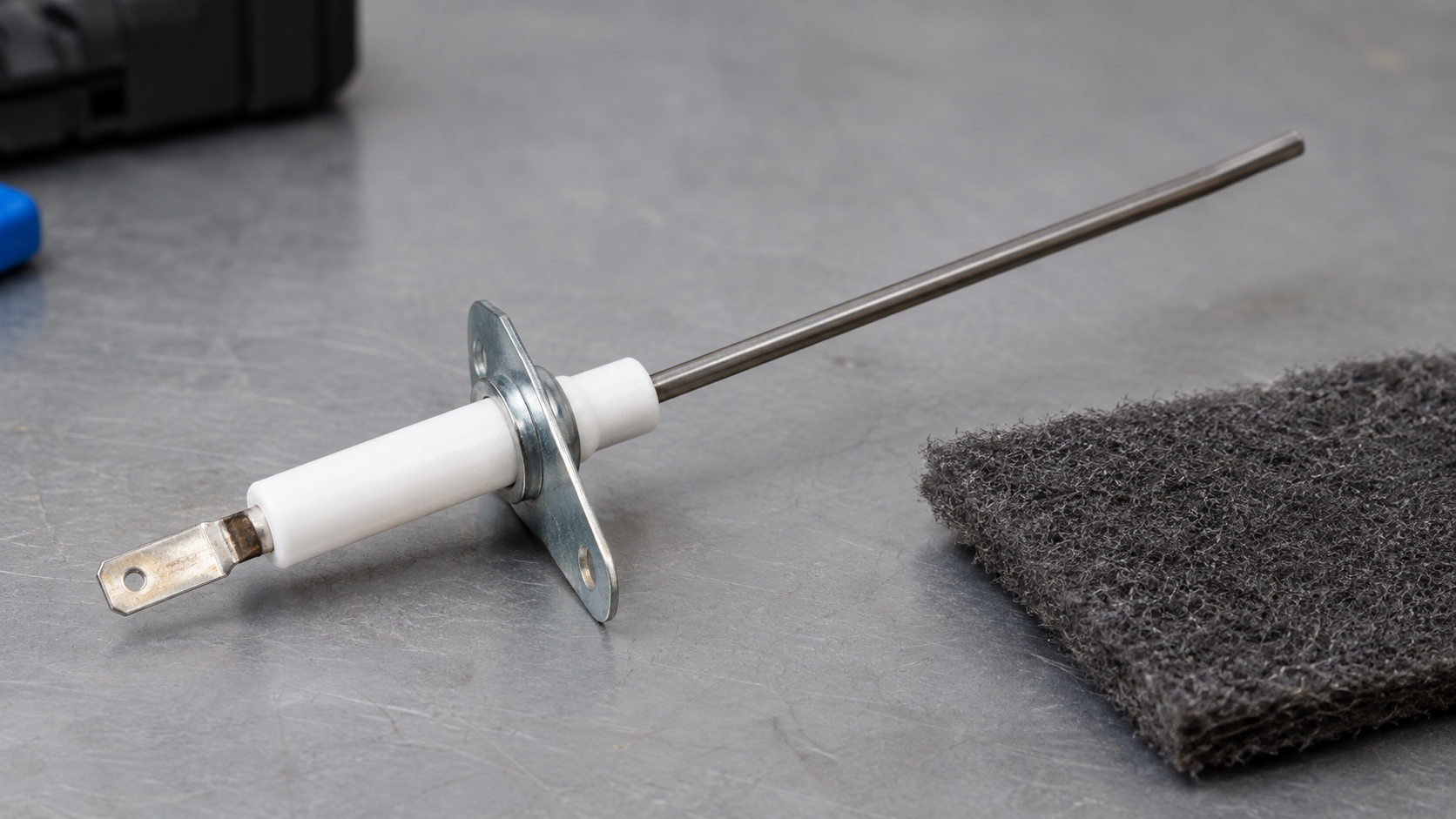
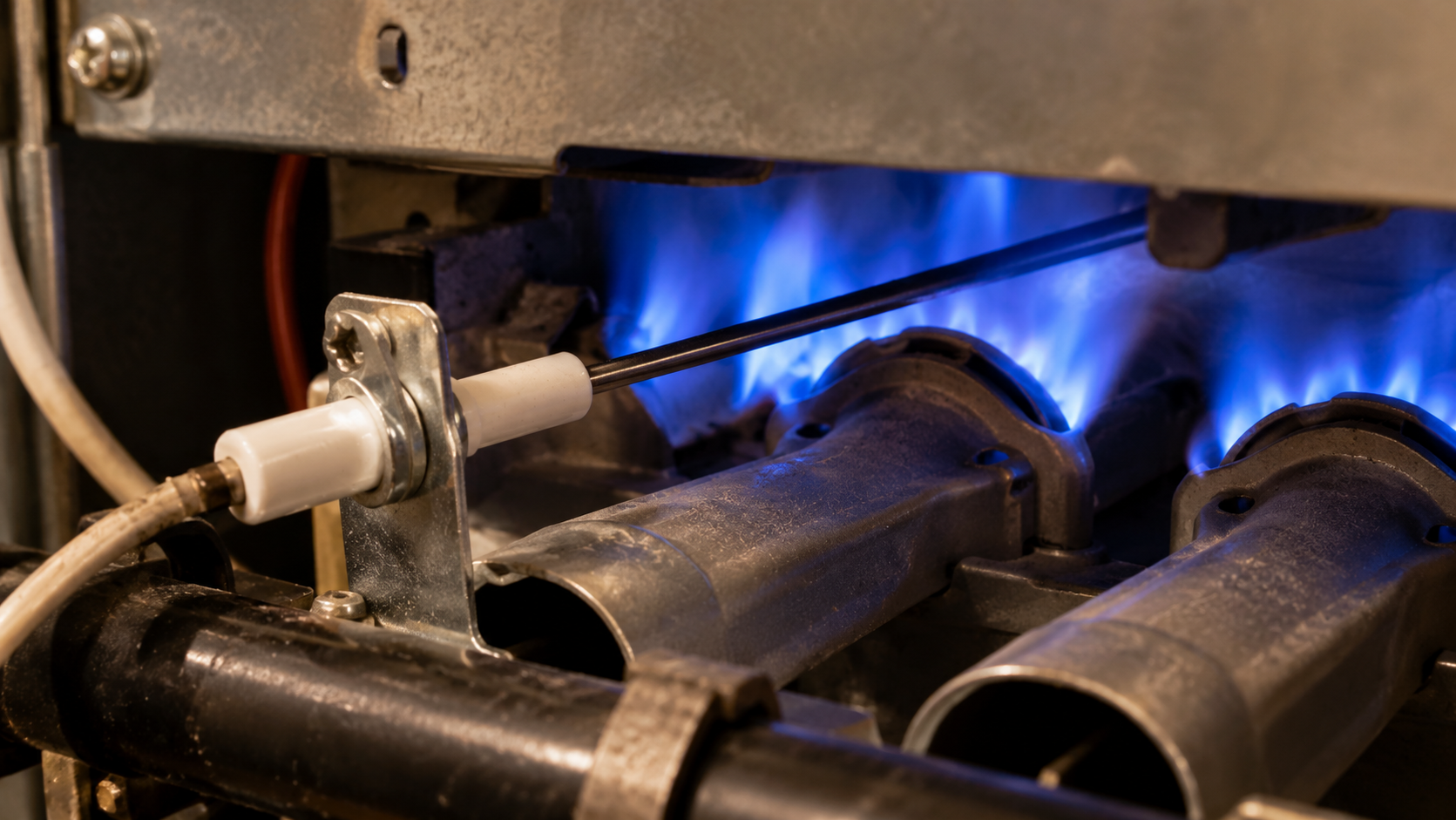
The flame sensor is a thin metal rod, mounted on a ceramic insulator, that sits directly in the burner flame path. It is a safety device, and its only job is to confirm that the gas actually ignited.
It works on a principle called flame rectification. The control board sends a small AC voltage down the rod. When a flame surrounds it, the flame conducts current between the rod and the grounded burner — but only in one direction, converting it to a tiny DC signal measured in microamps. The board watches for that signal. If it sees it, gas keeps flowing. If it does not, the board assumes the gas never lit and closes the gas valve within seconds.
That shutdown is the system working correctly. An unlit burner pumping gas into a house is exactly the scenario the sensor exists to prevent — which is why the failure mode is always "shut down," never "keep running anyway."
Why It Fails
The sensor rarely fails electrically. What usually happens is that a thin, almost invisible layer of oxidation, soot, or silica residue builds up on the rod over months of operation. That coating insulates the rod just enough that the microamp signal drops below the board's minimum threshold — and the board, unable to confirm a flame, shuts the gas off even though the burners are clearly lit.
Common contributors:
- Normal oxidation from thousands of heating cycles
- Silica buildup from household cleaning products, candles, or aerosols drawn into the combustion air
- Construction dust — drywall and sanding dust is a frequent culprit after remodeling
- A cracked ceramic insulator, which lets the rod short to ground and kills the signal entirely
- Poor burner grounding, since rectification requires a solid ground path back through the burner assembly
Confirming It's the Flame Sensor
The symptom pattern is the first clue, and it separates this failure cleanly from the other common no-heat causes:
| What You Observe | Likely Cause |
|---|---|
| Burners light, then shut off after 3–10 seconds | Flame sensor — dirty, cracked, or poorly grounded |
| Ignitor glows, but burners never light | Gas valve or gas supply issue |
| Ignitor never glows at all | Failed hot surface ignitor or its circuit |
| Inducer runs, sequence never advances to ignition | Pressure switch not closing — blocked flue or condensate drain |
| Runs a full cycle, then short-cycles on heat | Restricted airflow tripping the high-limit switch |
The definitive test is a microamp reading. With a multimeter set to DC microamps placed in series with the sensor lead, a healthy sensor typically reads somewhere in the range of 2–6 µA on most residential equipment, though the manufacturer's stated minimum is the number that matters — and it varies by board. A reading that starts acceptable and drops steadily as the burner runs is the classic signature of a contaminated rod.
Clean It or Replace It?
Unlike a hot surface ignitor, a flame sensor is genuinely cleanable, and cleaning resolves the majority of these calls.
- Clean it when the rod is intact and the ceramic insulator is uncracked. Use fine steel wool, an abrasive pad, or emery cloth to gently remove the surface film — then wipe it with a clean cloth to remove any residue left behind.
- Replace it when the ceramic insulator is cracked or chipped, the rod is pitted, warped, or burned thin, the wire terminal is corroded, or the microamp reading stays low immediately after a proper cleaning.
Avoid sandpaper with a coarse grit — aggressive abrasion removes metal from the rod and shortens its remaining life. The goal is to remove a film, not to reshape the part.
Pro Tip for Contractors: If a cleaned sensor reads low again within weeks, stop cleaning and check the ground path — a loose burner assembly screw or corroded ground wire produces identical symptoms, and no amount of sensor cleaning will fix a rectification circuit that has nowhere to ground.
Choosing the Right Replacement
Flame sensors look nearly identical across manufacturers, but they are not interchangeable. Match:
- Rod length and bend angle — the tip has to sit in the flame envelope. A rod that is too short or angled wrong will read low even when brand new.
- Mounting bracket and screw spacing — determines rod positioning relative to the burner.
- Terminal type — spade connector sizes vary by manufacturer.
- OEM part number where the equipment is still under warranty.
Texpert Deals stocks flame sensors and furnace sensors, alongside the hot surface ignitors and control boards that account for most of the remaining no-heat service calls.
Frequently Asked Questions
How often should a flame sensor be cleaned?
Once a year, as part of routine pre-season furnace maintenance, prevents the majority of these service calls. Homes with heavy dust, frequent candle use, or recent construction may benefit from more frequent cleaning.
Why does my furnace light and shut off repeatedly, then stop trying?
Most control boards attempt ignition three times before entering a hard lockout. The lockout is deliberate — it prevents the furnace from cycling gas indefinitely when it cannot confirm a flame. Cycling power at the breaker resets it, but the underlying fault will repeat until it is corrected.
Can a dirty flame sensor be dangerous?
The sensor failing dirty is the safe failure direction — the board shuts the gas off rather than letting it flow unlit. The real risk is bypassing or jumping the sensor to "fix" the symptom, which disables the safety entirely and should never be done.
How long do flame sensors last?
The rod itself can last the life of the furnace with periodic cleaning. Replacement is typically driven by a cracked insulator or physical degradation of the rod rather than by age alone.
Is this a safe DIY repair?
Cleaning a flame sensor is one of the more approachable furnace maintenance tasks, provided the power and gas are shut off first. That said, it sits inside a gas appliance where a misdiagnosis can leave a genuine safety issue in place — if the symptom returns quickly after cleaning, bring in a licensed technician rather than continuing to clean around the real fault.
Final Thoughts
Burners that light and then quit a few seconds later are the flame sensor's signature. Check the rod for a dull film, clean it gently, and verify the microamp signal holds steady through a full cycle. If the reading stays low or the ceramic is cracked, replace it — and match the rod length and bracket, not just the part's general shape.
Browse flame sensors and furnace controls, or request a wholesale quote for volume orders ahead of heating season.