Furnace Venting: What You Can and Cannot Reuse on a Replacement
Furnace replacements happen in autumn, and the venting is where the budget surprises live. A homeowner expects the new furnace to connect to the existing flue the way the old one did. Sometimes it can. If the new unit is a condensing model and the old one was not, it cannot — and the flue is not the only thing that changes.
Vent Categories, Briefly
Gas appliance venting is sorted into categories based on two properties: whether the exhaust condenses, and whether the vent runs under positive or negative pressure. Two of them cover almost all residential work:
- Category I — non-condensing, negative pressure. The exhaust leaves hot and dry and rises on its own buoyancy. This is the 80% AFUE furnace and the standard atmospheric gas water heater, and it vents through double-wall metal Type B vent or a lined masonry chimney.
- Category IV — condensing, positive pressure. The exhaust leaves cool and wet, pushed by the inducer rather than rising on its own. This is the 90%+ AFUE furnace, and it vents through plastic — PVC, CPVC, or polypropylene, according to the materials the manufacturer lists for that specific furnace.
Categories II and III exist and are rare in residential equipment. The practical distinction on almost every job is Category I versus Category IV.
Why the Old Metal Flue Cannot Be Reused
Two independent reasons, either of which disqualifies it:
The exhaust is now wet. A condensing furnace extracts so much heat that water vapor in the flue gas condenses into mildly acidic liquid. Type B vent is galvanized steel built for hot dry gases, and it corrodes when continuously exposed to that condensate.
The exhaust is now under positive pressure. Type B vent uses crimped, twist-lock joints that are not gastight — they do not need to be, because a Category I vent operates under negative pressure and any leakage draws inward. Put a positive-pressure appliance on that same vent and combustion products are pushed out at every joint, into the building.
The reverse substitution fails too: plastic pipe cannot vent an 80% furnace, because Category I flue gas is far too hot for it.
| Furnace Type | Vent Category | Vent Material |
|---|---|---|
| 80% AFUE, natural draft | Category I | Type B double-wall metal, or lined masonry |
| 90%+ AFUE, condensing | Category IV | PVC / CPVC / polypropylene, per manufacturer's listing |
| Atmospheric water heater | Category I | Type B double-wall metal, or lined masonry |
Direct Vent, Single Pipe, and Concentric
Category IV furnaces come in two configurations, and the distinction affects both performance and the install:
- Direct vent (two-pipe). One pipe exhausts, a second draws combustion air from outdoors. The burner compartment is sealed from the building. This is generally the better arrangement — it does not consume conditioned indoor air, and it is less sensitive to depressurization from exhaust fans or a dryer.
- Single-pipe. Exhaust only, with combustion air taken from the surrounding space. Simpler, but it pulls heated indoor air into the burner and depends on that space having adequate combustion air.
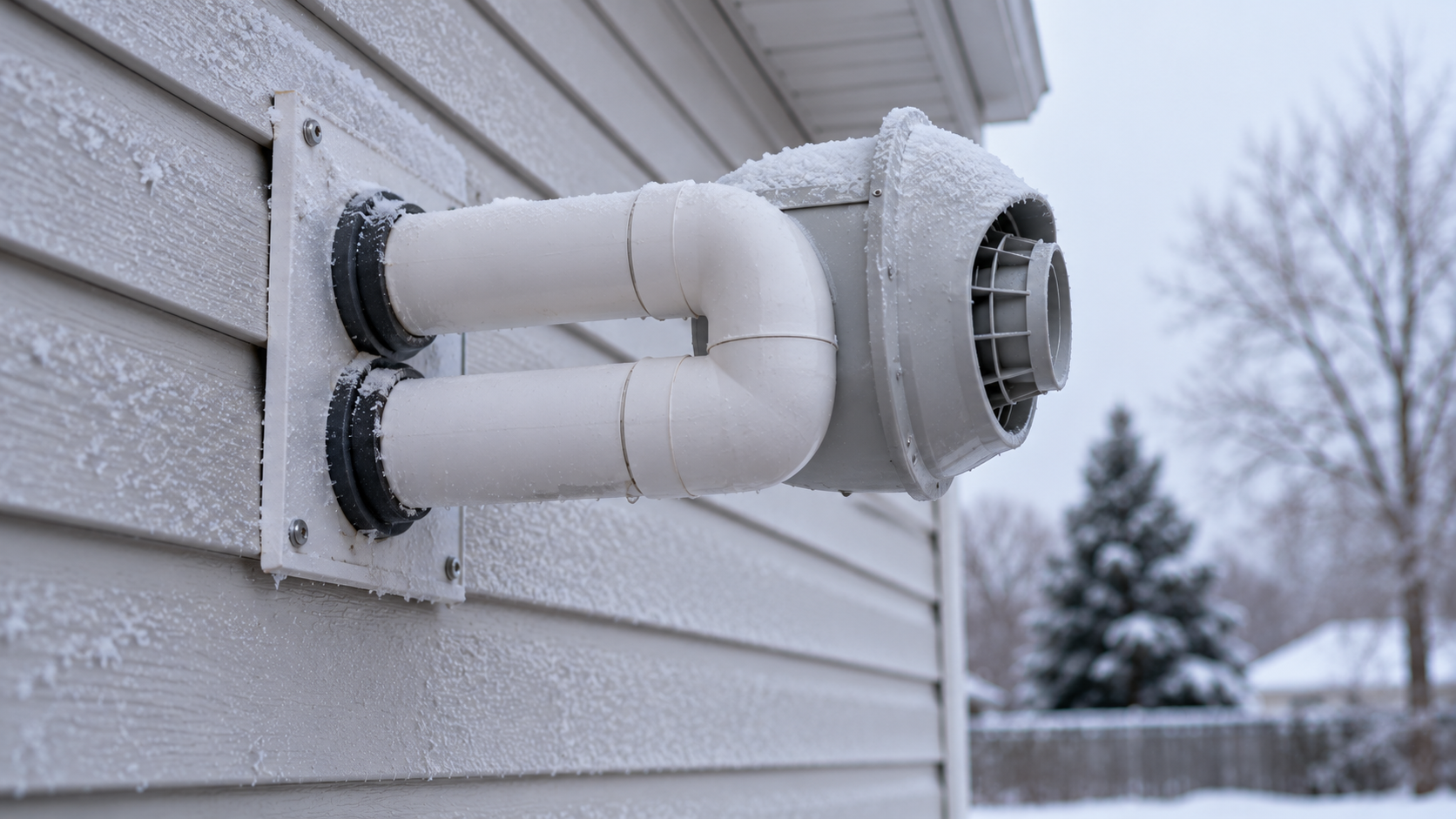
A concentric vent kit is a direct vent arrangement that routes both pipes through a single penetration, exhaust inside and intake in the surrounding annulus. It means one hole in the wall or roof instead of two, which matters on a finished exterior, on a tight sidewall, or where the two terminations would otherwise be hard to separate correctly.
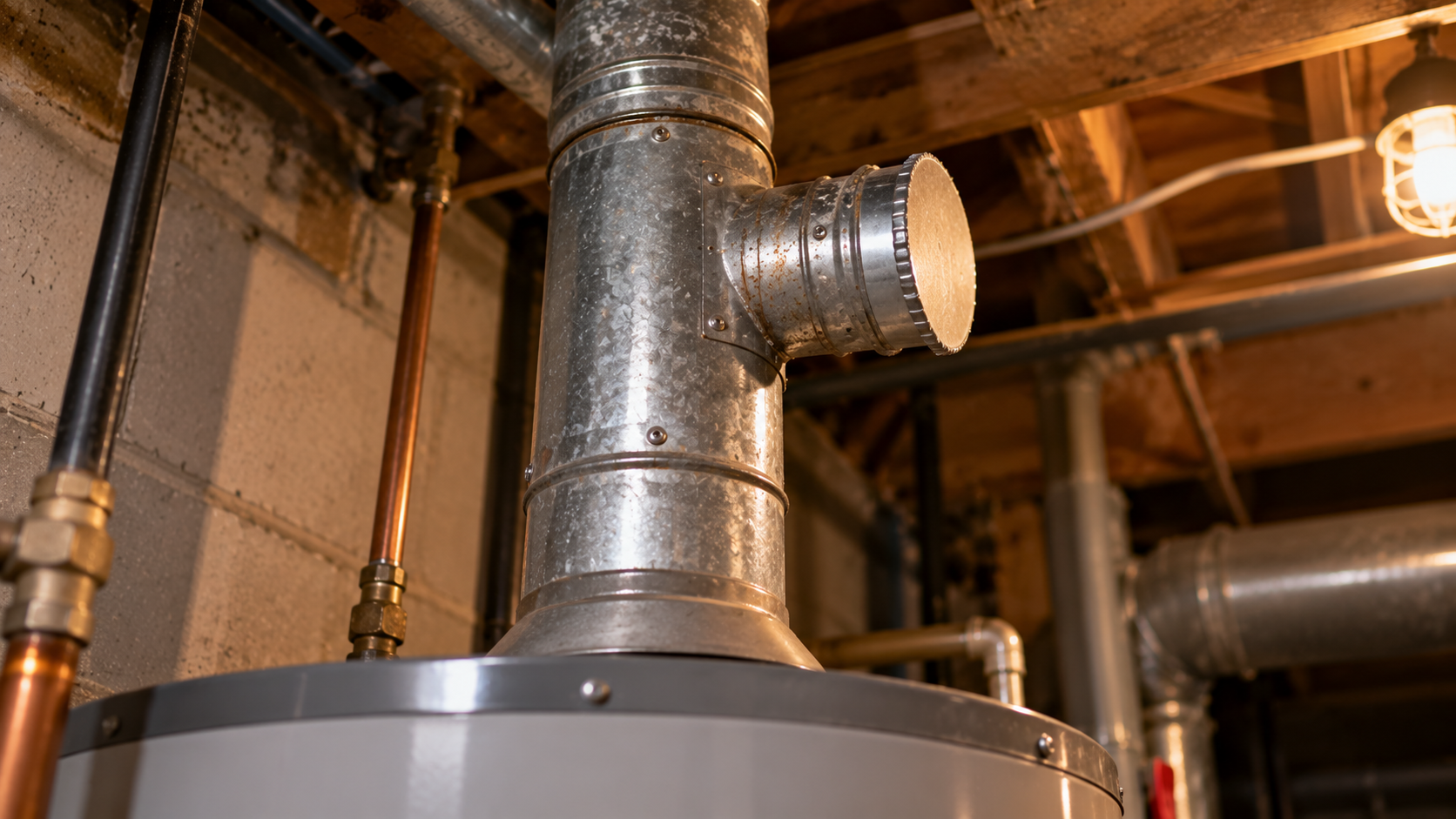
The Orphaned Water Heater
This is the consequence most often missed on a furnace upgrade, and it creates a safety issue rather than a performance one.
In a great many homes the old 80% furnace and the gas water heater shared a common vent, and that vent was sized for both appliances together. Replace the furnace with a condensing model venting through new plastic pipe, and the water heater is suddenly alone on a flue sized for a much larger combined load.
A small atmospheric water heater struggles to establish and hold draft in an oversized, now-cold vent. The practical results:
- Slow or failed draft establishment at burner start, with combustion products spilling into the room before draft takes hold
- Condensation forming inside the oversized vent, because the flue gases cool before they reach the top
- Corrosion of the vent and the water heater's draft hood from that condensate
- In the worst case, sustained spillage of combustion products — including carbon monoxide — into the living space
The remedies are to resize or reline the vent for the water heater alone, or to replace the water heater with a power-vent or direct-vent model that does not depend on natural draft. Either way it is part of the furnace replacement scope, not a separate problem to discover later. A furnace quote that ignores it is incomplete.
Pro Tip for Contractors: Make the orphaned-appliance check part of the site survey, before the quote goes out. Finding a shared flue on survey day turns into a line item the customer understands. Finding it on install day turns into an uncomfortable conversation, an unplanned return trip, and a water heater drafting badly in the meantime.
Venting Faults That Show Up Mid-Winter
Once a Category IV system is in, most venting complaints trace to a handful of causes:
- A sagging exhaust run. Condensing vent must be sloped so condensate drains back toward the furnace, per the manufacturer's instructions. A sag between supports becomes a water trap that blocks flue gases — and the symptom is a pressure switch fault, not anything that looks like a vent problem.
- A blocked termination. Snow drift, ice formed from the exhaust's own moisture, leaves, or an insect or bird nest. The first hard freeze and the first heavy snow both produce a wave of these.
- Exceeding maximum equivalent length. Every elbow counts as additional equivalent feet, and the furnace's installation manual sets a limit for the pipe diameter used. A run that was marginal when installed starts failing as anything else degrades.
- Separated joints. Positive-pressure vent has to be properly solvent-welded or gasketed. A joint that was never fully seated leaks combustion products into the building.
- Intake obstruction. On a direct vent system the intake is just as critical as the exhaust, and it is the one people forget to check.
A Note on Terminations and Code
Termination clearances — distance from windows, doors, soffits, grade, snow line, meters, and other appliance intakes — are governed by local code and by the furnace manufacturer's installation instructions, and they vary. There is no universal set of dimensions worth quoting, and the manufacturer's instructions take precedence as the listed installation.
What is worth saying generally: terminations need enough separation that exhaust is not drawn back into the intake, enough height that snow will not bury them, and clearance from anywhere the plume can cause a nuisance or re-enter the building. Verify against the manual and local code for every installation rather than matching what the previous installer did.
Frequently Asked Questions
Can I reuse my existing chimney for a new high-efficiency furnace?
Not as the furnace's vent. A condensing furnace requires its own plastic venting run. In some cases an unused masonry chimney becomes a convenient chase to route that new pipe through, which is a different thing from venting into the chimney itself.
Why does my new furnace vent out the side of the house?
Because it no longer needs buoyancy to move the exhaust — the inducer pushes it. That frees the termination from having to go up through the roof, and sidewall termination is often the shorter, simpler run.
What's the white vapor coming out of my sidewall vent?
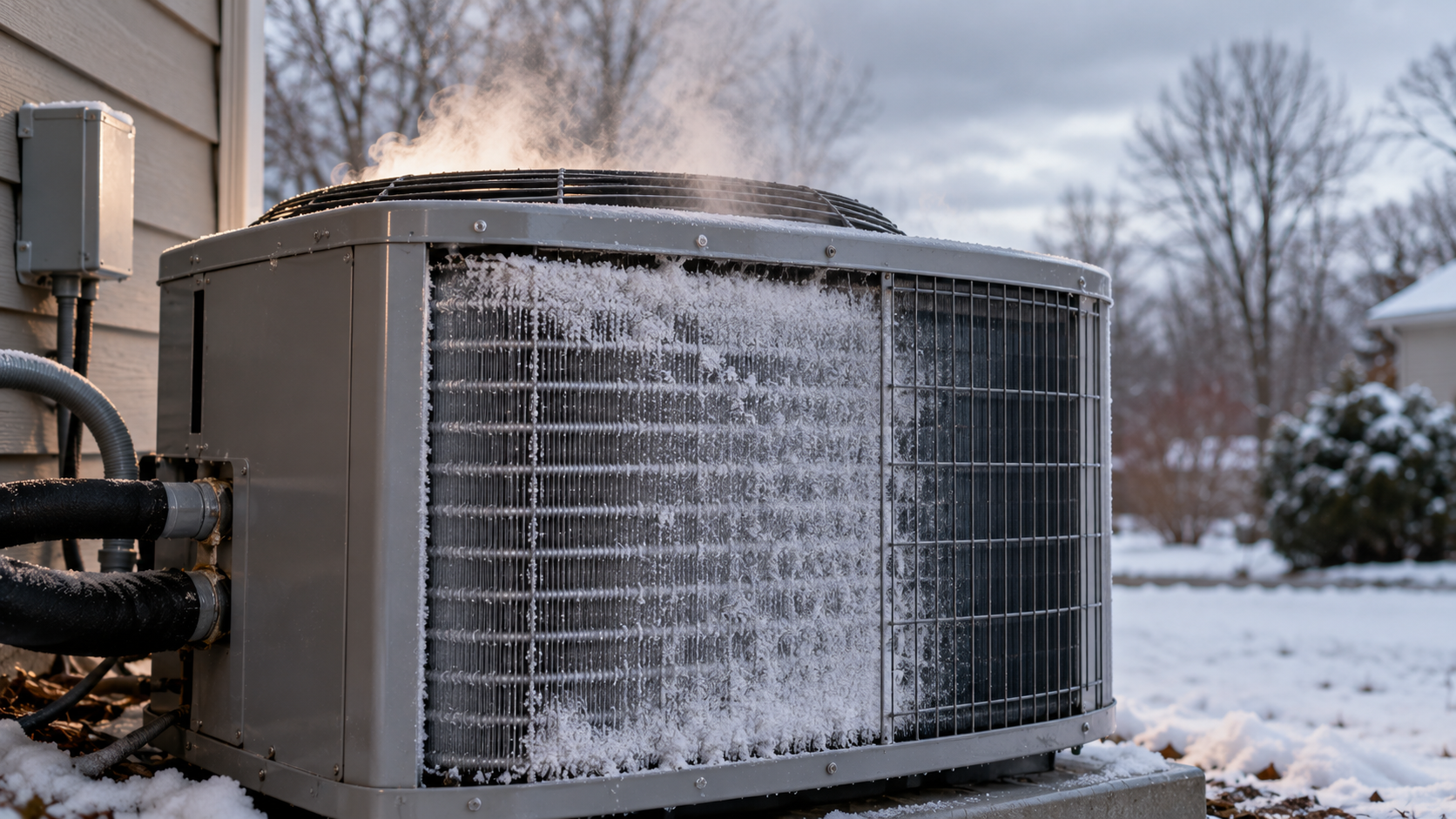
Water vapor. A condensing furnace's exhaust is cool and saturated, so it becomes visible as it hits cold outdoor air. A visible plume in winter is normal operation.
Is two-pipe really better than single-pipe?
Generally yes. Sealed combustion does not consume conditioned indoor air and is less affected by exhaust fans, range hoods, and dryers depressurizing the space. Single-pipe can be perfectly acceptable where the mechanical space has adequate combustion air, but direct vent removes a whole class of potential problems.
My water heater started smelling or rusting after the new furnace went in. Related?
Very likely, and worth having checked promptly. That is the classic orphaned water heater pattern — poor draft in an oversized vent producing condensation, corrosion, and potential spillage. It is a combustion safety issue, not a cosmetic one.
Final Thoughts
Efficiency upgrades change the venting, not just the furnace. An 80% to 90%+ swap means new plastic venting, a decision between two-pipe and concentric termination, and a hard look at anything else that was sharing the old flue. Get the orphaned appliance question answered during the survey, slope the condensing run so it drains, and verify terminations against the manual rather than the previous install.
Browse B-vent pipe and fittings, concentric vent kits, and wall and roof vents, or request a wholesale quote for replacement season.