Copeland Scroll Compressor Diagnostics: Acid Burnout, Overheating & Hard Starts
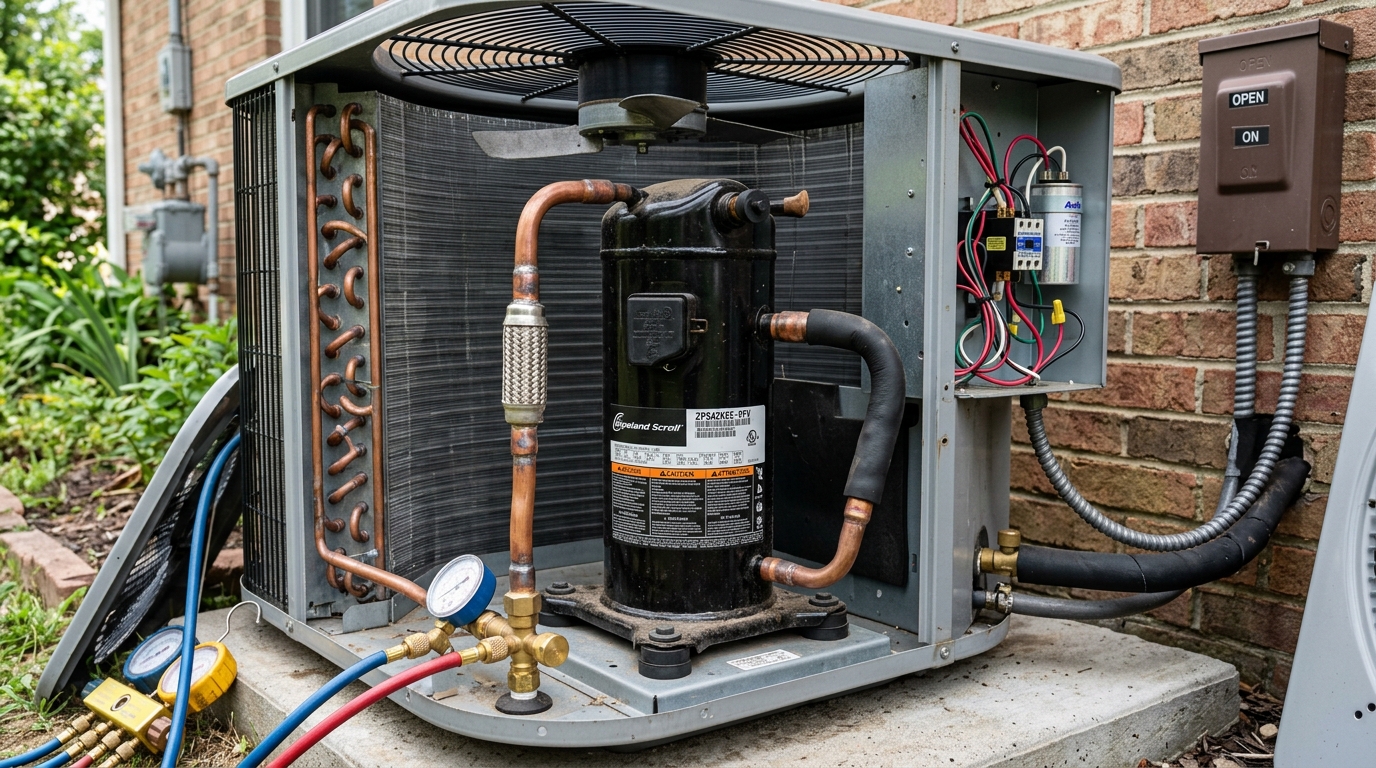
The Copeland Scroll compressor is the beating heart of over 70% of residential air conditioning and heat pump systems in North America. Its revolutionary orbiting scroll design eliminated the valves, wrist pins, and connecting rods of older reciprocating pumps, yielding higher efficiency and exceptional reliability.
When a scroll compressor trips its internal protector or fails to start, technicians must follow a rigorous diagnostic procedure to determine root cause before condemning the compressor.
1. Electrical Diagnostics: Resistance & Ground Fault Testing
Before replacing any compressor, perform the following electrical measurements at the hermetic terminal plug:
- Winding Ohms Check: Measure Start-to-Common (S-C), Run-to-Common (R-C), and Start-to-Run (S-R). Verify that Resistance(S-C) + Resistance(R-C) = Resistance(S-R) within ±0.2 ohms.
- Megohmmeter Insulation Test: Test each terminal to clean copper ground at 500VDC. Readings above 100 Megaohms indicate healthy insulation; readings below 20 Megaohms indicate severe winding degradation or moisture contamination.
2. Internal Pressure Relief (IPR) Bypass vs Locked Rotor
If a Copeland scroll runs with normal amp draw but fails to build differential pressure (high and low side pressures equalize around 150–180 PSIG), the internal pressure relief bypass has tripped. This occurs when discharge pressure exceeds 550–625 PSIG due to a failed condenser fan motor or severely choked coil. Allow the compressor to cool fully before re-testing.
3. Hard Start Kits: When and How to Install
On long line set applications or single-phase systems experiencing low line voltage during summer grid peaks, installing a potential relay and start capacitor hard start kit (such as a Supco hard start kit) increases starting torque by up to 500%, preventing locked rotor nuisance trips.
4. Acid Burnout Cleanup Protocol
If a compressor suffers a motor burnout, the high heat decomposes POE lubricant into hydrofluoric acid. Replacing the compressor without a thorough cleanup guarantees failure of the new unit within months.
- Install a high-capacity liquid line filter drier.
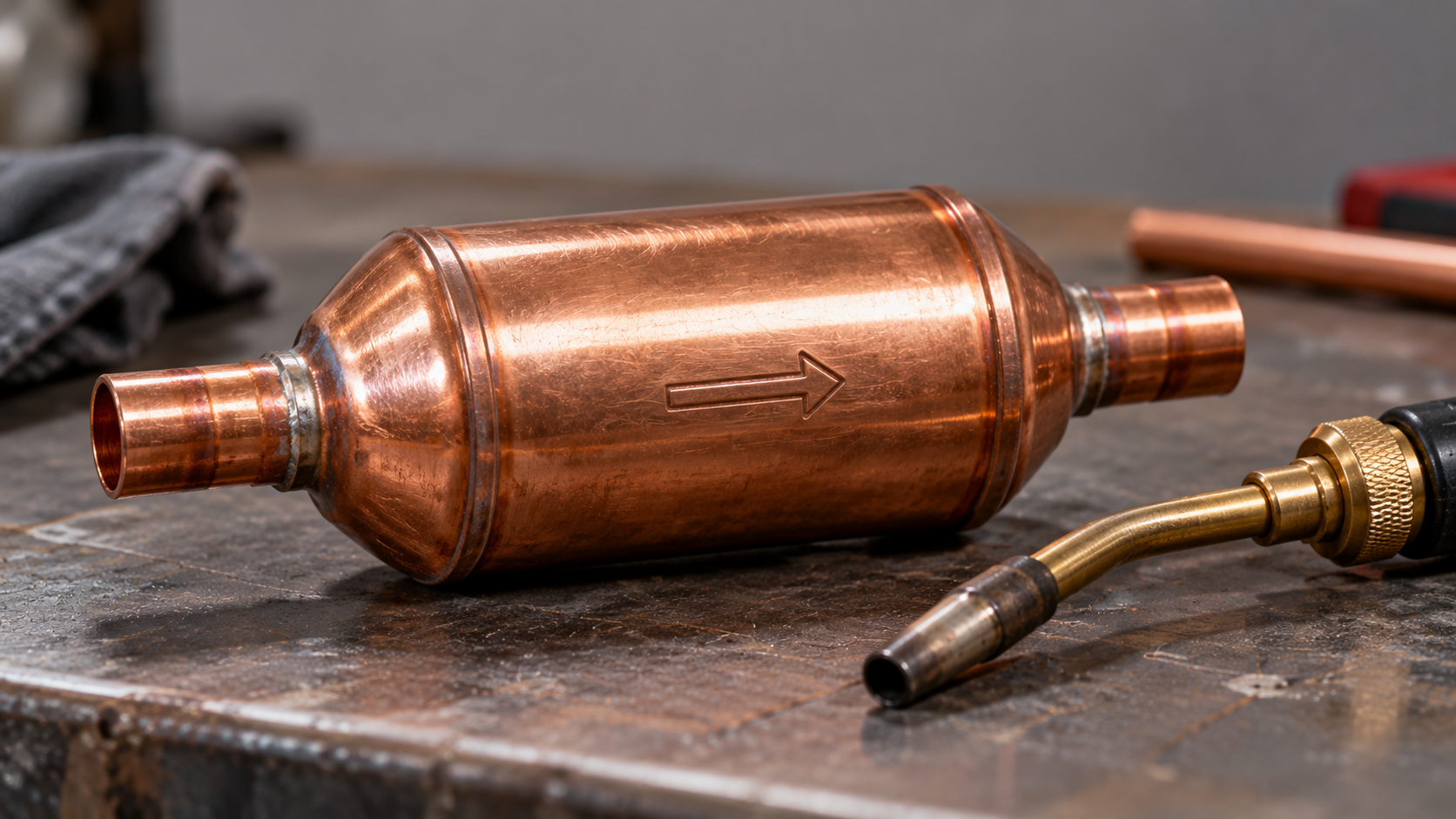
- Install a temporary suction line filter drier with high acid-adsorption core.
- Replace the contaminated contactor and run capacitor.
- Perform an oil acid test after 48 hours of operation; remove the suction drier once the system tests acid-free.
Find genuine Copeland scroll compressors, ICM surge protectors, and Supco hard start components at Texpert Deals.